
Amazon Return Pallets vs. Wholesale Liquidation Pallets: What’s the Difference?
Amazon Return Pallets vs. Wholesale Liquidation Pallets: What’s the Difference?
If you have been looking into starting a resale business, you have probably come across Amazon return pallets and wholesale liquidation pallets. Both can be ways to purchase inventory in bulk, but they are not exactly the same. Choosing the wrong type of pallet can leave you with products that take too long to sell, cost more to handle than expected, or simply do not match what your customers want.
The confusion is understandable. The terms are often used interchangeably, and both types of pallets can contain anything from household goods and electronics to clothing, tools, toys, and seasonal products.
The real difference comes down to where the inventory comes from, why it is being sold, what condition it is in, and how much uncertainty you are willing to accept as a buyer.
Let’s break down how each option works, what to look for before buying, and which one may make more sense for your business.
What Are Amazon Return Pallets?
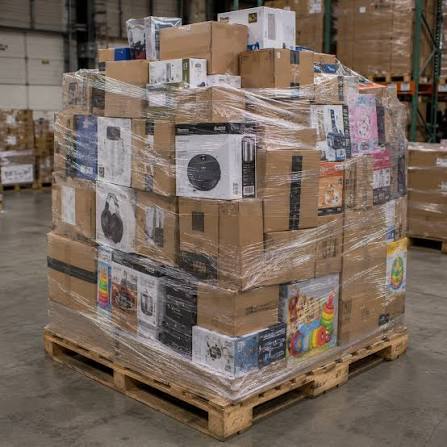
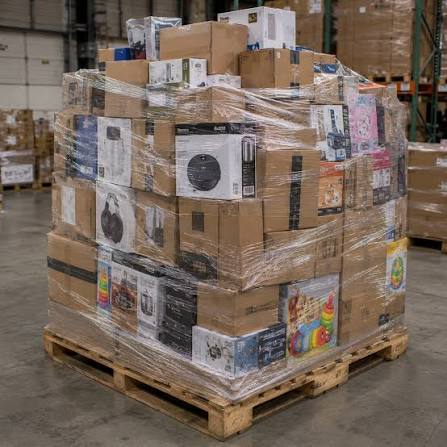
Amazon return pallets generally contain products that customers have returned through Amazon’s retail marketplace or inventory originating from related retail supply channels. These products may eventually be sold through liquidation marketplaces, wholesalers, or other resale businesses.
A customer might return an item because they ordered the wrong size, changed their mind, received a damaged package, or found that the product did not meet their expectations. In some cases, the product itself is perfectly fine. In others, it may have been used, damaged, or returned without all its original accessories.
Depending on the specific lot, an Amazon return pallet may contain:
- Small kitchen appliances and household products
- Electronics and phone accessories
- Tools and home improvement supplies
- Clothing, footwear, and accessories
- Toys, games, and seasonal merchandise
- Products with opened packaging or missing parts
Not every pallet contains all these categories. Some are focused on a particular product type, while others contain a mixture of unrelated merchandise.
Another important point: a pallet advertised as an Amazon return pallet is not necessarily being sold directly by Amazon. It may come through a liquidation marketplace, a wholesale supplier, or an intermediary. Buyers should check who is actually selling the inventory and what documentation is provided.
Are all Amazon return products used?
No. A returned product could still be unused and sealed in its original packaging. Another item might have been opened, tested, or used for a period of time. Some products may be incomplete or no longer functional.
That is why the words customer returns should not be treated as a guarantee of quality. Ask the seller about the condition categories, testing procedures, and whether the merchandise is sold as-is.
What Are Wholesale Liquidation Pallets?
Wholesale liquidation pallets are bulk lots of merchandise sold through liquidation or surplus inventory channels. Retailers, distributors, manufacturers, and other businesses may liquidate products for several reasons, including excess inventory, seasonal changes, discontinued product lines, customer returns, and packaging changes.
Unlike Amazon return pallets, which describe inventory associated with a particular retail channel, wholesale liquidation pallets describe a broader category of bulk inventory.
A liquidation pallet might contain customer returns, but it could also consist of brand-new overstock products that never sold through a regular retail store.
Common examples include:
- Overstock pallets: Products purchased in quantities greater than a retailer needs.
- Shelf-pull pallets: Items removed from store shelves, often because of seasonal changes or product-line updates.
- Customer-return pallets: Products returned by customers, with condition varying from unused to damaged.
- Closeout pallets: Remaining stock from discontinued lines, seasonal sales, or business clearances.
- Mixed merchandise pallets: Lots containing products from several categories or product lines.
The exact meaning of terms such as Grade A, open box, or shelf pull can vary between suppliers. Do not assume that a condition label means the same thing everywhere. Ask for a clear explanation before making a purchase.
For example, a pallet of brand-new seasonal decorations may be a more straightforward option for a reseller than a mixed pallet of untested electronics. Both can offer opportunities, but the work and risks involved are different.
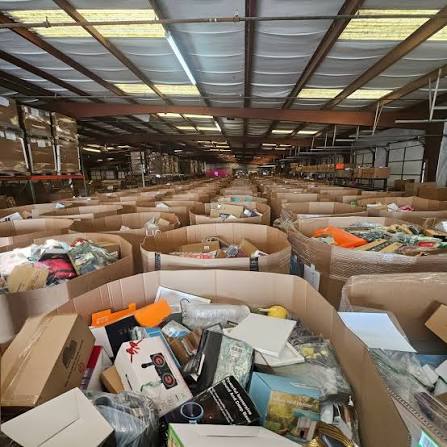
The Main Differences Between Amazon Return Pallets and Wholesale Liquidation Pallets
Although the two categories can overlap, several differences are worth understanding before you spend money on inventory.
1. Source of the inventory
Amazon return pallets are associated with products returned through Amazon’s retail channel or inventory described by a seller as Amazon-origin merchandise. Wholesale liquidation pallets can come from a wider range of retailers, distributors, manufacturers, and other suppliers.
If you are considering Amazon return pallets, confirm the seller’s sourcing information. If you are buying wholesale liquidation pallets, ask which retailer or supplier the stock came from when that information is available.
2. Product condition
Amazon return pallets can contain unopened items, open-box products, used merchandise, damaged goods, and items that need testing.
Wholesale liquidation pallets offer a wider range of possibilities. Some consist of customer returns, while others contain new overstock, shelf pulls, or closeout inventory.
Neither label guarantees that every item is new or working. The specific lot description and seller’s terms matter more than the name used in the advertisement.
3. Product variety
Amazon return pallets are often associated with mixed consumer merchandise, although category-specific lots are also available.
Wholesale liquidation pallets can be mixed or highly specialized. For example, a buyer may find a pallet focused on tools, fitness equipment, handbags, Christmas decorations, or electronics.
For a small business, a focused pallet can be easier to manage because the owner can concentrate on a particular customer group. A mixed pallet may offer more variety, but it can also require additional time to sort, research, photograph, and list the items.
4. Inspection and preparation
Returned merchandise may need to be inspected item by item. Electronics might need functional testing, clothing may need to be checked for stains or damage, and household products may need to be checked for missing accessories.
New overstock usually requires less condition-related work, although packaging, quantities, labels, and completeness should still be checked.
Remember that new overstock and customer returns are not interchangeable descriptions. Confirm which type of inventory you are purchasing instead of assuming all liquidation merchandise is handled the same way.
5. Resale planning
A pallet with a clear inventory list and reliable condition information is generally easier to evaluate than an unidentified mixed lot.
Amazon return pallets can suit resellers who are comfortable assessing individual products and handling uncertain outcomes. Wholesale liquidation pallets may suit buyers who want to choose a specific category or source stock for a discount store, online shop, or local resale operation.
The best choice depends on the actual merchandise, not simply which label sounds more attractive.
Which Type of Pallet Is Better for Beginners?
There is no universal winner. A beginner should focus on finding inventory that is manageable, affordable, and relevant to the customers they intend to serve.
If you are new to reselling, consider these questions before choosing a pallet:
Do you understand the products? If you already know how to assess tools, clothing, small appliances, or another category, you may find it easier to spot missing parts and estimate resale prices.
Can you test the merchandise? A pallet of electronics can require more technical knowledge than a lot of sealed household products. Make sure you have the equipment, time, and skills needed to inspect what you buy.
Do you have enough storage space? A low-priced pallet is not necessarily a good deal if it takes up space for months. Bulky products, seasonal decorations, and large appliances may require more room than expected.
Where will you sell the items? Local marketplaces, online stores, auctions, and physical retail locations all have different customers and selling costs. Choose inventory that fits the channel you plan to use.
Can you afford a slow sale? Even useful products may take time to sell. Avoid committing money you need for rent, essential bills, or other immediate expenses.
For many beginners, a smaller, clearly described pallet in a familiar category is a sensible starting point. It provides an opportunity to learn how sourcing, inspection, pricing, and customer service work before moving into larger purchases.
How to Calculate Whether a Pallet Is Worth Buying
One of the most common mistakes new resellers make is comparing the purchase price with the original retail value of the products.
A pallet advertised with thousands of dollars in retail value does not mean you will collect that amount in sales. Original retail prices do not account for used condition, missing accessories, current competition, discounts, marketplace fees, or the time it takes to sell each item.
Instead, calculate the total landed cost and estimate realistic revenue.
Your costs may include:
- The price of the pallet
- Freight, delivery, or pickup expenses
- Taxes and any applicable buyer fees
- Sorting, inspection, and testing
- Cleaning, repairs, or replacement accessories
- Packaging, shipping, and marketplace fees
- Storage and the cost of unsellable products
Here is a simple example.
Imagine you purchase a pallet for $800. Delivery costs $150, sorting and testing cost $100, cleaning and preparation cost $50, and packaging and selling expenses total $100.
Your estimated total cost is $1,200.
If you eventually sell the merchandise for $1,800 in total, your estimated profit before any other overhead or income taxes would be $600. That represents a 50% markup on the $1,200 cost, or a 33.3% profit margin on the $1,800 revenue.
However, this result depends on actually achieving those sales. If several items are damaged, some products remain unsold, or selling expenses turn out to be higher, the profit will shrink.
Use conservative selling prices based on comparable products and their actual condition. If possible, look at completed sales rather than relying only on active listings. It is also wise to leave room in your calculations for unexpected costs.
What Is a Pallet Manifest, and Why Does It Matter?
A manifest is an inventory list describing the products expected to be included in a pallet or lot. Depending on the seller, it may include product names, quantities, model numbers, condition information, and estimated retail values.
A useful manifest helps you understand what you are buying before the shipment arrives. It can also help you research resale prices and identify products that are difficult to sell.
But a manifest is not a guarantee that every item will arrive in the stated condition or that every listed product will sell at its original retail price. Ask whether the list is complete, how recently it was prepared, and what happens if the delivered inventory differs from the listing.
If a pallet is unmanifested, ask for recent photographs, a clear description of the merchandise category, the condition terms, and the seller’s policy on discrepancies. Treat the uncertainty as part of the purchase decision.
A lower upfront price may not be worthwhile if you have little idea what you will receive.
Important Safety Checks When Reselling Liquidation Products in Canada
Buying inventory at a discount does not remove your responsibility to sell products safely.
In Canada, consumer product safety requirements can apply to both new and used merchandise. Health Canada advises sellers to check for recalled or prohibited products, damaged goods, missing essential parts, and products that may not meet current safety requirements. You can consult the official Government of Canada guide to buying second-hand products for practical guidance.
Pay particular attention to products where damage or missing parts could create a safety risk, including certain children’s products, helmets, electrical goods, and other regulated items. Check product identification and certification information where applicable, and consult relevant recall notices.
If you cannot establish that an item is safe and compliant, do not simply list it for sale because it came from a wholesale pallet.
Good inspection practices protect customers and help you build a resale business that people are comfortable buying from again.
Where Can You Buy Liquidation Pallets in Canada?
There are several ways to source inventory, including liquidation marketplaces, wholesale suppliers, local liquidation warehouses, and businesses that specialize in particular product categories.
Before choosing a supplier, compare more than the advertised price. Look at the product descriptions, photographs, condition details, shipping costs, pickup arrangements, payment terms, and return or discrepancy policies.
It is also worth asking whether the supplier sells customer returns, overstock, shelf pulls, or a combination of these. That distinction can make a significant difference to the amount of work required after delivery.
For buyers exploring different categories, City Pallets https://citywholesaleliquidations.com/Wholesale Liquidations is one place to review available wholesale and liquidation inventory. Check the details of each listing carefully, including quantities, product condition, and purchase terms, before deciding whether a pallet fits your business.
Do not rely on a supplier’s name or an advertised discount alone. A good buying decision starts with understanding the specific inventory being offered.
Common Mistakes to Avoid
Even experienced resellers can misjudge a pallet. A few simple precautions can help you avoid expensive surprises.
Buying because the advertised retail value looks impressive. The original retail price is not the same as the price customers are willing to pay today.
Assuming all returned items work. A product may be unopened, used, incomplete, or defective. Check the stated condition and testing policy.
Ignoring freight and handling. Delivery can make a seemingly cheap pallet much more expensive, particularly when the goods are heavy or bulky.
Buying products without knowing the market. Research your likely customers and competing listings before committing to an unfamiliar category.
Overlooking unsold inventory. Not every item will sell quickly, and some may not sell at all. Plan for storage, markdowns, and responsible disposal.
Failing to check supplier terms. Understand whether the lot is sold as-is, what the photos represent, and whether there is any process for reporting missing or misdescribed merchandise.
The aim is not to eliminate every risk. It is to understand the risks well enough to make a reasonable buying decision.
Final Thoughts: Which Pallet Should You Choose?
Amazon return pallets and wholesale liquidation pallets can both provide opportunities for resellers, but they serve different needs depending on the source, condition, and type of merchandise.
Amazon return pallets may appeal to buyers who are prepared to sort and assess returned consumer goods. Wholesale liquidation pallets offer a broader range of inventory, including customer returns, new overstock, shelf pulls, and closeout merchandise.
For either option, the same basic principles apply: research the products, verify the seller’s terms, calculate the full cost, and estimate resale prices realistically.
You do not need to buy the biggest pallet or chase the largest advertised discount to build a resale business. Start with merchandise you understand, keep careful records, and use the results of each purchase to improve your next decision.
A profitable pallet is not simply the one you buy for the lowest price. It is the one whose products, costs, condition, and resale potential make sense for your business.