
Wholesale Pallets Liquidation: Where to Find Wholesale Liquidation Pallets and How to Buy
Wholesale Pallets Liquidation: Where to Find Wholesale Liquidation Pallets and How to Buy
Buying merchandise in bulk can be an effective way to stock a retail store, expand an online business, or find products to resell at competitive prices. For many business owners, wholesale pallets liquidation is one of the buying options worth exploring.
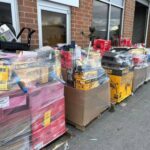
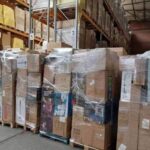
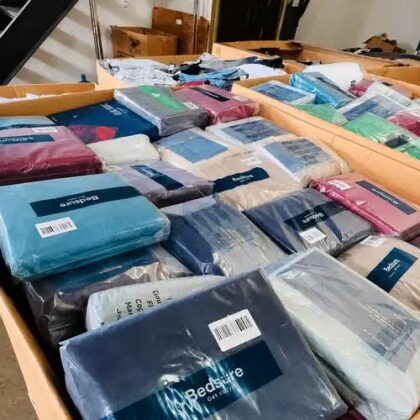
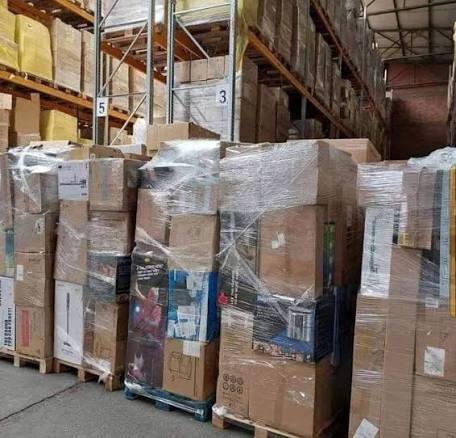
Instead of purchasing individual products from traditional distributors, buyers can purchase entire pallets of merchandise through wholesale liquidation suppliers. These pallets may contain customer returns, overstock, open-box products, discontinued items, or mixed general merchandise.
The appeal is easy to understand. A single pallet can contain multiple products, giving buyers an opportunity to source inventory in larger quantities. However, not every pallet is the same, and a low advertised price does not automatically make it a good purchase.
If you are searching for wholesale pallets liquidation, comparing wholesale liquidation suppliers, or looking for wholesale liquidation pallets near me, this guide will help you understand the market and make more informed buying decisions.
What Is Wholesale Pallets Liquidation?
Wholesale pallets liquidation refers to purchasing bulk merchandise that is being sold through liquidation channels rather than through ordinary retail distribution.
Retailers, manufacturers, distributors, and other businesses may have products they no longer need in their regular inventory. These goods can include excess stock, customer returns, discontinued merchandise, seasonal products, and open-box items.
Instead of selling each product individually, the merchandise may be grouped into pallets and offered to wholesale buyers.
Depending on the supplier, a wholesale liquidation pallet might contain one product category or a mixture of different items.
For example, a pallet could contain:
- Household and kitchen products
- Small appliances
- Electronics and accessories
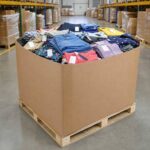
- Clothing and footwear
- Toys and children’s products
- Tools and hardware
- Personal care products
- Home décor and storage items
- Seasonal merchandise
- General merchandise from different retail categories
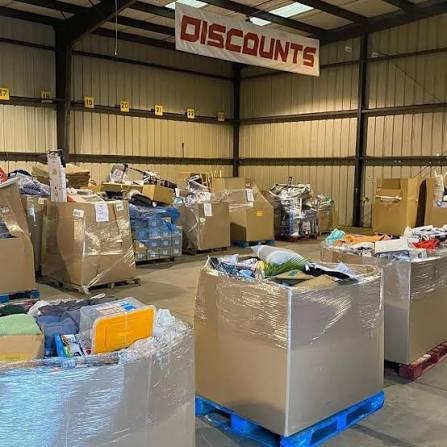
The actual contents depend on the individual listing. Some pallets are organized by category, while others are sold as mixed merchandise.
This is why buyers should look at the inventory description and condition before purchasing rather than assuming every wholesale liquidation pallet contains the same products.
Why Do Businesses Buy Wholesale Liquidation Pallets?
Wholesale liquidation appeals to different types of buyers, from small independent resellers to established retailers. The reasons for purchasing vary, but most buyers are looking for ways to source merchandise in bulk and build a suitable inventory.
1. Buying products in larger quantities
Purchasing a wholesale liquidation pallet gives buyers access to multiple products in one transaction. This can be more convenient than sourcing each item separately.
For businesses that regularly sell discounted merchandise, buying pallets can provide a way to replenish stock and explore different product categories.
2. Finding merchandise for resale
Resellers often look for liquidation inventory that matches the products their customers already buy.
For example, a seller specializing in household products may look for kitchenware, storage products, small appliances, and home accessories. A retailer selling general merchandise may prefer mixed pallets with several categories.
The important thing is to choose inventory that fits your existing customer base or a market you understand.
3. Exploring different product categories
Some wholesale liquidation pallets provide an assortment of merchandise rather than a single product type.
This can help buyers discover new products and test different categories. However, mixed pallets also require more sorting and inventory management.
4. Supplying discount stores and local retailers
Discount stores often need a varied selection of products at different price points. Wholesale liquidation can provide an additional sourcing option for businesses that sell affordable household items, electronics, accessories, clothing, and other merchandise.
5. Expanding an existing business
An established reseller may use wholesale pallets liquidation to increase inventory volume. As the business grows, it may move from individual pallets to multiple pallets or even truckload purchases.
Larger orders require more storage, capital, transportation planning, and staff. Buying more merchandise only makes sense when the business can manage and sell it.
Types of Wholesale Liquidation Pallets
Before looking for wholesale liquidation pallets near me, it helps to understand the different types of inventory available.
Customer return pallets
Customer return pallets contain merchandise that has been returned by customers. Products may have been returned for many reasons, including incorrect sizing, unwanted purchases, damaged packaging, missing components, or product defects.
Some returned products may be unused and in good condition. Others may need testing, repair, or disposal.
Buyers should never assume that all customer return merchandise is fully functional.
Overstock pallets
Overstock pallets generally contain surplus inventory that a retailer or distributor no longer needs in its regular stock.
Depending on the supplier, these products may be new and unused. Packaging can still vary because merchandise may have been stored, handled, or moved between warehouses.
For buyers who prefer new merchandise, asking about overstock availability and condition is important.
Open-box pallets
Open-box pallets contain products whose packaging has been opened. An opened package does not necessarily mean the product has been used, but the condition should be verified.
Some items may be complete and unused, while others may have missing accessories or signs of handling.
General merchandise pallets
General merchandise pallets contain a variety of products from different categories.
A mixed wholesale liquidation pallet may include household items, accessories, toys, electronics, kitchen products, personal care merchandise, and other consumer goods.
These pallets can be useful for businesses that sell a broad assortment of discounted products.
Category-specific pallets
Some suppliers offer pallets focused on a particular type of merchandise.
Examples may include:
- Appliance liquidation pallets
- Electronics liquidation pallets
- Tool liquidation pallets
- Household goods pallets
- Clothing liquidation pallets
- Toy liquidation pallets
- Furniture liquidation pallets
- Beauty and personal care pallets
Category-specific pallets can be easier to manage if you already have a business focused on a particular product type.
Wholesale Liquidation Pallets Near Me: How to Find Local Suppliers
When buyers search for wholesale liquidation pallets near me, they are often looking for a warehouse or liquidation supplier where they can ask questions, compare merchandise, arrange pickup, or reduce transportation costs.
Local sourcing can be useful, especially when purchasing bulky merchandise. However, the nearest supplier is not automatically the best option. Inventory quality, purchase terms, freight charges, and supplier reliability still matter.
Here are several ways to find wholesale liquidation suppliers in your area.
1. Search for liquidation warehouses
Start by looking for local businesses that specialize in wholesale merchandise, liquidation pallets, customer returns, overstock, and general merchandise.
Search using terms such as:
- Wholesale liquidation pallets near me
- Wholesale pallets liquidation
- Liquidation warehouse near me
- Wholesale pallets for sale
- Customer return pallets near me
- General merchandise pallets
- Bulk liquidation merchandise
When you find a supplier, check its business details, location, contact information, and purchasing terms.
2. Contact suppliers directly
A supplier may not advertise every available product online. Contacting the business can help you find out whether it has the categories and quantities you need.
Ask about current inventory, pallet prices, merchandise conditions, and whether pickup or shipping is available.
3. Check warehouse pickup options
If the supplier offers local pickup, ask whether you can inspect the visible condition of the pallet before collection.
Also confirm the pickup process, loading arrangements, vehicle requirements, and whether you need to bring your own equipment.
4. Compare local and online suppliers
Online liquidation marketplaces can provide access to inventory from outside your immediate area. However, shipping can make a significant difference to the final cost.
Compare the total delivered price rather than looking only at the listed pallet price.
5. Look for suppliers serving your region
Some wholesalers serve customers across multiple provinces or regions. A supplier may be located outside your city but still offer freight arrangements that make purchasing practical.
For Canadian buyers, it is worth comparing suppliers in different parts of the country when local inventory is limited.
Wholesale Pallets Liquidation in Canada
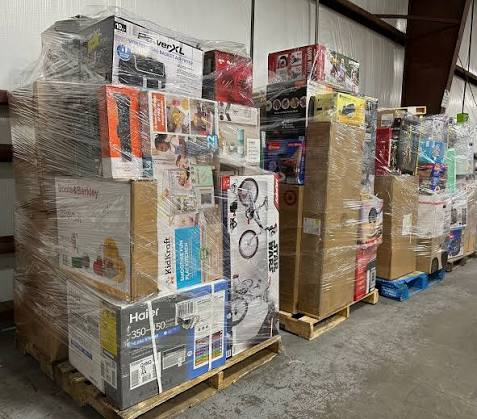
Canadian businesses have several options when exploring wholesale liquidation. Depending on the supplier, inventory may be available through local warehouses, independent wholesalers, online marketplaces, and larger liquidation channels.
When buying in Canada, pay attention to where the merchandise is physically located. A pallet already in Canada may involve a different delivery process from one being shipped across the border.
Before placing an order, check:
- The supplier’s business location
- Whether the merchandise is physically in Canada
- The inventory source and condition
- Whether pickup or freight delivery is available
- Applicable taxes
- Whether cross-border customs charges apply
- The supplier’s payment and return terms
For larger purchases, make sure you understand who is responsible for arranging transportation and handling any shipping claims.
What to Check Before Buying Wholesale Liquidation Pallets
Finding a pallet at an attractive price is only the beginning. A good purchasing decision requires understanding what you are buying and what it will cost to receive and process the merchandise.
1. Check the product description
Read the listing carefully. Does it describe a specific category, a mixed assortment, or a general quantity of merchandise?
Ask the supplier for more information if the description is unclear.
2. Understand the condition
Find out whether the products are new overstock, customer returns, open-box, used, salvage, or mixed condition.
Condition labels can differ between suppliers, so ask what each description means.
3. Ask for a manifest
A manifest is an inventory document that may list products, quantities, descriptions, and other identifying information.
Not every wholesale liquidation pallet comes with a manifest. Some are sold as unmanifested or mixed loads.
If a manifest is provided, check whether it is a guaranteed inventory list or an estimate. Do not assume every listed product will arrive in the same condition as a new retail item.
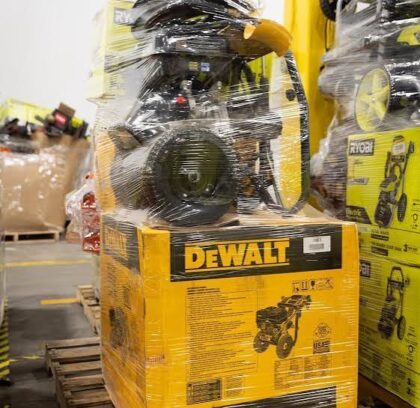
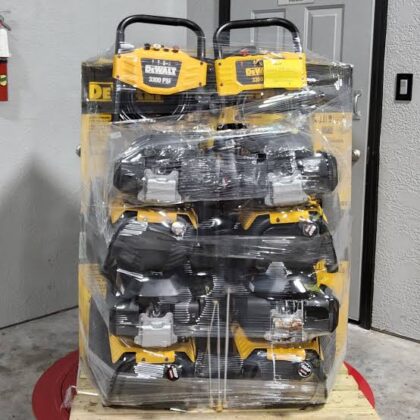
4. Request actual photographs
Ask whether the photographs show the actual pallet or are simply representative images.
Pictures can help you understand how the merchandise is packaged and whether there is visible damage, but they cannot replace a clear written description.
5. Calculate the full cost
The price of a wholesale liquidation pallet is not the only expense.
Your total cost may include:
- Merchandise purchase price
- Freight or local delivery
- Applicable taxes
- Customs charges for international shipments
- Unloading and handling
- Warehouse storage
- Labour for sorting and testing
- Repairs or missing components
- Packaging and selling expenses
Calculate these expenses before deciding whether a pallet fits your budget.
6. Review the supplier’s terms
Understand the payment requirements, pickup arrangements, shipping responsibilities, and return or dispute policies.
Many liquidation transactions are sold as-is, but the exact terms vary. Get the applicable conditions in writing before purchasing.
How Much Do Wholesale Liquidation Pallets Cost?
There is no fixed price for wholesale pallets liquidation. Prices vary depending on the category, product quantity, merchandise condition, supplier, and demand.
For example, an overstock pallet of new household products may have a different price from a mixed pallet of customer returns or an electronics pallet.
Some suppliers sell pallets at fixed prices, while others use auctions or negotiated bulk pricing.
When comparing wholesale liquidation pallets, look beyond the advertised retail value. Retail value does not tell you how many products will be suitable for resale or how much revenue you will actually recover.
A more practical approach is to estimate:
- The number of products likely to be sellable
- Realistic selling prices for those products
- Freight and receiving costs
- Testing, sorting, and repair expenses
- Marketplace or retail selling fees
- The time required to sell the inventory
This helps you decide whether the purchase makes sense for your business.
How to Resell Wholesale Liquidation Merchandise
Buying a pallet is only one part of the process. Once the merchandise arrives, you need a plan for handling and selling it.
Sort products by category
Separate the merchandise into groups such as household goods, electronics, clothing, toys, accessories, and other categories.
This makes it easier to organize stock and decide where each item should be sold.
Inspect and test products
Check product condition, packaging, accessories, and functionality where appropriate.
Do not advertise returned or untested merchandise as new or fully functional unless you have verified that description.
Research resale prices
Compare similar products on online marketplaces and local retail channels.
Use realistic prices based on current demand, product condition, and competition rather than relying on the original retail price.
Choose suitable selling channels
Depending on your business, you may sell through:
- A physical discount store
- An online store
- Online marketplaces
- Local classified listings
- Flea markets and community sales
- Wholesale sales to other retailers
Different products may perform better through different channels.
Track your inventory
Record the purchase cost, product condition, selling price, and expenses associated with each group of products.
This information can help you evaluate future wholesale liquidation purchases and identify the categories that work best for your business.
Wholesale Liquidation vs. Traditional Wholesale
Traditional wholesale and wholesale liquidation both involve buying merchandise in bulk, but the inventory and purchasing arrangements can be different.
| Factor | Traditional wholesale | Wholesale liquidation |
|---|---|---|
| Merchandise | Often current products from distributors or manufacturers | May include returns, overstock, closeouts, and surplus |
| Product condition | Usually new and consistent | Can vary by lot |
| Product selection | Often ordered by product or SKU | May be mixed or category-specific |
| Inventory information | Usually standardized | Can vary by supplier |
| Packaging | Generally retail-ready | May be opened, damaged, or non-original |
| Buying process | Often based on wholesale catalogues | May involve auctions, fixed-price lots, or negotiated purchases |
Neither model is automatically right for every business. Traditional wholesale may suit retailers who need consistent products and repeat orders. Liquidation may suit buyers who are comfortable evaluating variable inventory and handling bulk merchandise.
Why Choose a Canadian Wholesale Liquidation Supplier?
Buying from a Canadian supplier can make certain parts of the purchasing process more convenient.
Communication, payment, delivery arrangements, and warehouse pickup may be easier when the inventory is already located in Canada.
For businesses that purchase merchandise regularly, having a supplier they can contact directly is also useful when checking availability and discussing future orders.
City Pallets Wholesale Liquidations, based in Calgary, Alberta, offers wholesale and liquidation merchandise opportunities for customers across Canada.
Buyers can contact the team to ask about current inventory categories, pallet availability, pricing, pickup, and shipping arrangements. Since liquidation stock changes, specific products and quantities should always be confirmed before ordering.
If you are searching for wholesale pallets liquidation in Canada, you can visit City Pallets Wholesale Liquidations to explore the business and make an inquiry.
Who Should Buy Wholesale Liquidation Pallets?
Wholesale liquidation pallets may be suitable for different types of businesses, depending on their storage capacity, budget, and sales channels.
Small business owners: People operating discount shops, online stores, or local resale businesses may use pallets to source a range of products.
Experienced resellers: Buyers familiar with customer returns, overstock, and mixed merchandise may use liquidation inventory to replenish their stock.
Retail stores: Independent retailers may purchase category-specific pallets or general merchandise to add variety to their product selection.
Market vendors: Sellers at flea markets, trade events, and community markets may look for smaller merchandise that can be sorted and sold individually.
Wholesale buyers: Businesses that already have customers may purchase larger quantities and distribute products through their own sales networks.
New buyers should consider starting with a manageable order. It is better to understand the inventory and selling process before committing to more merchandise than the business can handle.
Frequently Asked Questions About Wholesale Pallets Liquidation
What is wholesale pallets liquidation?
Wholesale pallets liquidation is the purchase of bulk merchandise through liquidation suppliers. Products may include customer returns, overstock, open-box items, discontinued merchandise, and mixed general goods.
Where can I find wholesale liquidation pallets near me?
Search for local liquidation warehouses, wholesale pallet suppliers, and bulk merchandise businesses. Contact suppliers directly to confirm their location, current inventory, pricing, and pickup or delivery options.
Are wholesale liquidation pallets new?
Some pallets contain new overstock merchandise, while others contain customer returns, open-box items, used products, or mixed conditions. Always confirm the condition of the specific pallet.
Can I buy wholesale liquidation pallets in Canada?
Yes. Canadian buyers can explore local liquidation warehouses, independent wholesale suppliers, and online marketplaces that accept Canadian customers. Check where the inventory is located and whether freight or customs costs apply.
Do wholesale liquidation pallets come with a manifest?
Some do, but not all. A manifest may provide product descriptions and quantities. Other pallets are sold as mixed or unmanifested merchandise. Ask whether the inventory list is guaranteed or estimated.
Can I make money reselling liquidation pallets?
Reselling can be a business opportunity, but profits are not guaranteed. Your results depend on merchandise condition, purchase price, freight, selling expenses, customer demand, and how much work is required to prepare the products.
What is the difference between wholesale liquidation and regular wholesale?
Traditional wholesale generally involves purchasing new merchandise through distributors or manufacturers. Wholesale liquidation may include returns, excess stock, closeouts, and other surplus inventory, so product conditions and quantities can vary.
Does City Pallets Wholesale Liquidations sell wholesale liquidation pallets?
Contact City Pallets Wholesale Liquidations to ask about current pallet inventory, product categories, prices, and shipping arrangements. Availability changes, so confirm the details directly with the team.
Final Thoughts: Finding the Right Wholesale Pallets Liquidation Supplier
Buying wholesale pallets liquidation can give retailers and resellers another way to source bulk merchandise. Whether you are looking for household goods, electronics, tools, clothing, appliances, or mixed general merchandise, the key is to understand the actual products and conditions before purchasing.
Take time to compare suppliers, check inventory descriptions, calculate freight, and review the purchase terms. A pallet that looks inexpensive is not necessarily a good deal if the products do not suit your customers or require more work than you can manage.
If you are searching for wholesale liquidation pallets near me or comparing wholesale liquidation opportunities in Canada, consider suppliers that can explain their inventory and purchasing arrangements clearly.
For wholesale and liquidation merchandise inquiries, visit City Pallets Wholesale Liquidations. The Calgary-based team serves customers across Canada and can provide information about current availability, pricing, and shipping options.