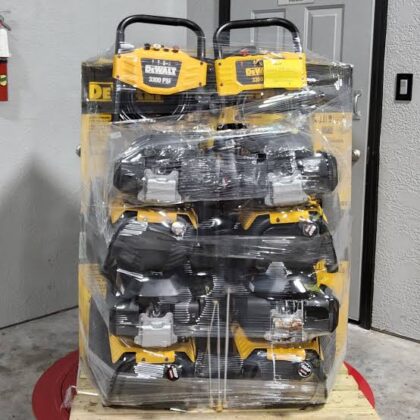

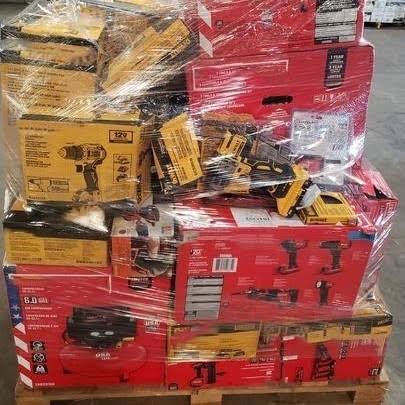
7 Things to Check Before Buying a Power Tools Pallet
7 Things to Check Before Buying a Power Tools Pallet
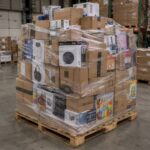
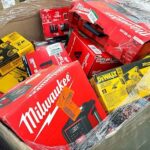
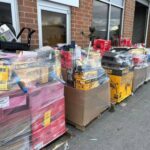
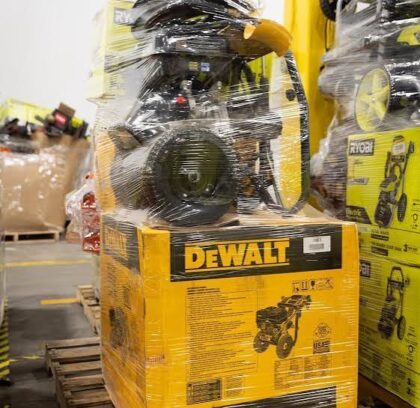
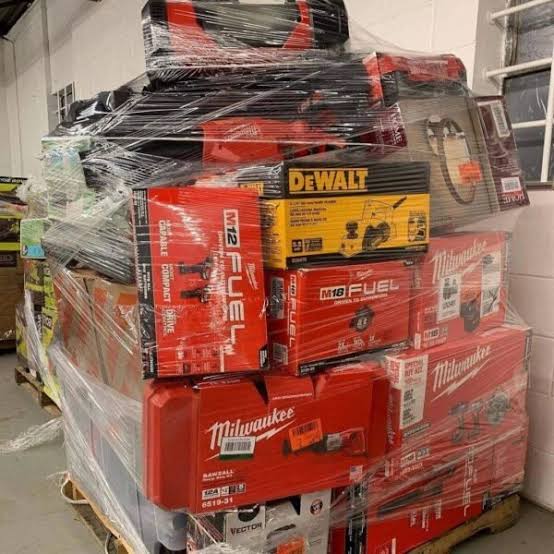
A pallet of power tools can look like the kind of opportunity you don’t want to miss. One photograph might show drills, impact drivers, grinders, saws, and other equipment that could easily attract buyers. The price may look promising, too.
But there is a question worth asking before you pay: How much of that pallet can you actually use or resell?
A power tools pallet can contain valuable equipment, incomplete kits, damaged boxes, customer returns, and tools whose condition is difficult to judge from a photograph. Two pallets with similar-looking contents can turn out very differently once you start opening boxes and checking what is inside.
That doesn’t mean buying liquidation tools is a bad idea. It means the decision deserves more attention than simply comparing the pallet price with the original retail value.
If you’re considering buying power tools in bulk for resale, workshop use, or your own business, here are seven things worth checking before committing your money.
1. Check What Is Actually Included
The first mistake buyers make is assuming that everything pictured in a power tools pallet is ready to use.
A cordless drill, for example, might be listed or pictured with a battery and charger, but the actual unit could arrive without either. A circular saw might be present without its blade, while another tool could be missing a side handle, guard, depth stop, or other essential component.
These details matter because a tool’s value depends partly on how complete it is.
Before buying, ask whether the pallet comes with an inventory manifest. A useful manifest identifies the products, quantities, model numbers where available, and stated condition. Also ask whether the list is exact or only an estimate.
Pay particular attention to:
- Batteries and compatible chargers
- Carrying cases and storage boxes
- Blades, bits, and other attachments
- Safety guards and auxiliary handles
- Manuals and model-specific accessories
- Components required for normal operation
If the pallet is unmanifested, treat the uncertainty as part of the purchase decision. Don’t calculate your expected return as though every accessory is present.
A missing carrying case might be a minor inconvenience. A missing battery system or safety-critical component can make a tool significantly less useful or more expensive to prepare for resale.
2. Look Beyond the Packaging
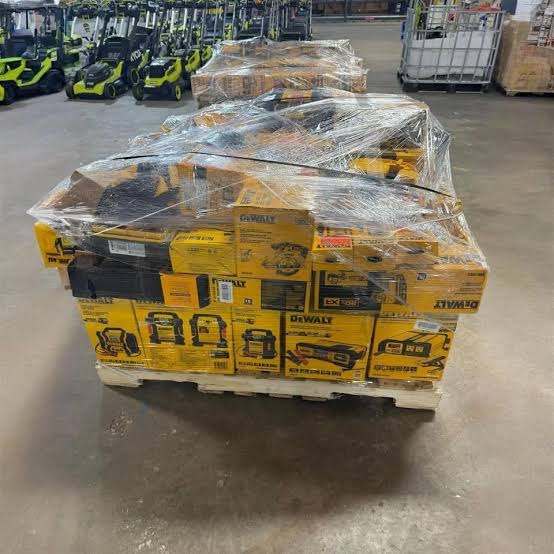
Damaged packaging is one of the most misleading details in liquidation buying because it can mean several different things.
A box might have a crushed corner from warehouse handling while the tool inside remains unused. Another box could be open because a customer returned the product after using it. A third might have been exposed to moisture or rough handling that affected the equipment itself.
The outside doesn’t always tell the whole story.
When reviewing pallet photographs, look for torn seals, crushed cartons, water stains, loose components, and signs that products have been repacked. Ask the seller for additional photographs if the images don’t clearly show the condition.
It also helps to understand the difference between common inventory descriptions:
- New overstock: Excess inventory that may be unused, subject to the seller’s specific description.
- Open box: Packaging has been opened; completeness and use history need confirmation.
- Customer returns: Previously purchased products whose condition may vary.
- Untested: Functionality has not been verified.
- Salvage: Products may be damaged, incomplete, or suitable only for parts.
These labels aren’t interchangeable. A pallet advertised as overstock should not automatically be valued like a pallet of tested, complete tools.
The important question isn’t whether the box looks attractive. It’s whether the tool’s actual condition matches the price you’re paying.
3. Find Out Whether the Tools Have Been Tested
A power tool can look perfectly fine and still have a fault that only appears when you switch it on.
A drill might have a failing trigger. A grinder could make unusual noises because of worn internal components. A saw may have a damaged switch or a problem with its guard mechanism.
Visual inspection is useful, but it cannot establish that a tool works properly.
Before buying, ask what the seller means by tested. Was every tool checked, were only selected items powered on, or was the pallet sold without functional testing?
There is a real difference between a tool that powers on and one that has been checked through its intended operating functions.
If you can inspect the tools before purchase, examine the casing, switches, handles, cords, plugs, and moving parts. Look for cracks, exposed wiring, corrosion, burning smells, or evidence of overheating.
Any functional testing should follow the manufacturer’s instructions and appropriate safety procedures. Don’t operate equipment with damaged guards, exposed wiring, suspect switches, or other potentially dangerous faults. Defective tools should be set aside for qualified assessment rather than treated as ready for resale.
For cordless tools, remember that a failed test doesn’t always mean the tool itself is faulty. The battery or charger could be the problem. However, a damaged or swollen battery should never be charged or used simply to see whether it still works.
The Canadian Centre for Occupational Health and Safety provides useful guidance on inspecting powered hand tools.
If a pallet is sold as untested, price it with that uncertainty in mind. Don’t quietly turn “untested” into “probably working” just because the tools look clean.
4. Check the Battery Platform and Accessories
Cordless power tools deserve special attention because batteries and chargers can represent a substantial part of the cost of a usable kit.
Imagine buying several cordless drills at what appears to be a very low price. After delivery, you discover that most have no batteries, and the units use different battery platforms.
You now have more than a missing-accessory problem. You have to determine which compatible batteries and chargers are needed, whether replacements are available, and whether buying them makes financial sense.
Before purchasing, check:
- The brand and model of each cordless tool
- The battery platform and voltage
- Whether batteries and chargers are included
- Whether compatible replacement components are available
- The visible condition of any included batteries
Don’t assume that batteries from different tool platforms are interchangeable just because they look similar or share a voltage rating. Use only compatible battery and charging systems recommended by the manufacturer.
If you intend to resell the tools, consider how customers will use them. A bare tool can still be a worthwhile product for someone who already owns compatible batteries, but it may appeal to a smaller audience than a complete kit.
For a reseller, the real question is whether the likely selling price justifies the cost of completing the tool.
5. Research the Real Resale Value
This is where an apparently excellent deal can become an expensive lesson.
A pallet may have a high combined retail value on paper, but the original retail prices don’t tell you what customers will actually pay for the products in their current condition.
A tool that originally sold for $200 might command much less if it is used, incomplete, untested, or missing its battery. A damaged box may have little effect on the price of an unused tool, while a mechanical fault could make the same product difficult to sell at all.
Research individual models rather than relying only on brand names or broad categories.
Look at recent completed sales on relevant marketplaces, paying attention to whether the items were new, used, tested, or sold for parts. Asking prices are useful for understanding competition, but they don’t prove that buyers are paying those amounts.
Then estimate your costs.
For example, imagine a hypothetical pallet costs $1,200, with another $250 for freight and $150 for testing, cleaning, and replacement accessories. Your initial cost is already $1,600 before marketplace fees, packaging, taxes, or other selling expenses.
If some tools turn out to be unsellable, the remaining items must recover a larger share of the total cost.
A simple starting formula is:
Net profit = sales revenue − total costs
Include the pallet price, shipping, repairs, replacement accessories, selling fees, packaging, and any other expenses relevant to your operation.
Don’t build your budget around the best-case scenario. Estimate what happens if several tools need repairs, some remain unsold, or the market price is lower than expected.
6. Consider Who Will Actually Buy the Tools
Not every useful tool is easy to resell, and not every recognizable brand guarantees strong demand.
A professional contractor may look for a specific battery platform because they already own compatible equipment. A homeowner might prefer a complete kit with a case and charger. Someone setting up a workshop may be interested in individual tools at a reasonable price.
Your likely customer affects which pallets make sense.
Before purchasing, consider whether the assortment matches your intended market. A pallet dominated by similar drills may be useful if you have buyers looking for that product, but less attractive if your customers want a broad range of equipment.
Check model numbers, availability of replacement parts, local demand, and competition. Also consider whether the tools are appropriate for your selling market, including electrical compatibility and applicable product-safety requirements.
For Canadian resale, Health Canada’s guidance on buying electrical products online explains the importance of checking legitimate Canadian electrical certification marks, compatibility, and product safety.
A pallet is not automatically a good purchase because it contains well-known names. It is a good candidate when the products,
condition, price, and likely buyers line up.
7. Understand the Seller’s Terms Before Paying
The final check is often overlooked because buyers are focused on the products rather than the transaction.
Before committing, find out what happens if the pallet differs materially from its listing. Ask about the return policy, reporting deadlines, freight arrangements, and how discrepancies should be documented.
If an inventory manifest is provided, establish whether quantities and conditions are guaranteed or estimated. If photographs are used, ask whether they show the actual pallet or only representative examples.
Also confirm the total delivered cost. Freight can change the economics of a pallet considerably, particularly if it is heavy, oversized, or being shipped over a long distance.
Keep copies of the listing, manifest, invoice, and relevant correspondence. When the pallet arrives, photograph its condition before unpacking and record any visible damage or discrepancies promptly.
For buyers sourcing inventory from suppliers such as City Pallets Wholesale Liquidations, the same principle applies: understand the specific listing, verify the details available, and make your purchasing decision based on the actual terms rather than assumptions.
Clear expectations won’t eliminate every risk, but they can help prevent avoidable disagreements later.
Frequently Asked Questions
Are power tools pallets worth buying?
They can be, provided the purchase price reflects the condition, completeness, testing status, shipping costs, and likely resale value. A cheap pallet can still be a poor investment if many tools need expensive repairs or missing components.
Should I buy an untested power tools pallet?
Only if you understand the uncertainty and have budgeted for it. Consider whether you can inspect and test the tools safely, obtain replacement parts, and sell or dispose of defective products responsibly.
Can I resell power tools without batteries or chargers?
Often, yes, depending on the product, condition, and applicable requirements. Clearly state what is included and ensure the listing accurately represents the tool. Bare tools may appeal to buyers who already own compatible batteries.
Is damaged packaging a sign that a power tool is defective?
Not necessarily. Packaging damage can occur without damage to the tool itself, but it can also conceal missing parts or previous use. Inspect the actual product and verify its condition wherever possible.
How do I estimate the value of a power tools pallet?
Identify the models, check recent completed sales for comparable conditions, and calculate the total landed cost. Account for missing accessories, repairs, selling fees, shipping, and products that may not be resalable.
The Best Deal Is the One You Understand
Buying a power tools pallet isn’t simply a matter of finding the lowest price or the biggest collection of recognizable brands. It’s about understanding what you’re getting, what might be missing, what can be tested, and what customers are realistically willing to pay.
The seven checks above won’t make every purchase predictable. Liquidation inventory still comes with uncertainty. But they can help you replace guesswork with better questions and more realistic calculations.
Sometimes the right decision is to buy. Sometimes it’s to negotiate a lower price. And sometimes walking away is the most profitable choice you can make.
Before buying the next pallet, look beyond the photograph. The details inside the boxes are what determine whether the deal actually works.