
The Journey of Returned Goods: Understanding the Process at Liquidation
The Journey of Returned Goods: Understanding the Process at Liquidation
Returned Goods are an important part of today’s retail and wholesale landscape. When customers send products back to retailers, those items do not always return directly to store shelves. Depending on their condition, the retailer’s policies, and the cost of processing them, returned goods may be inspected, repackaged, refurbished, resold, donated, recycled, or sold through liquidation channels.
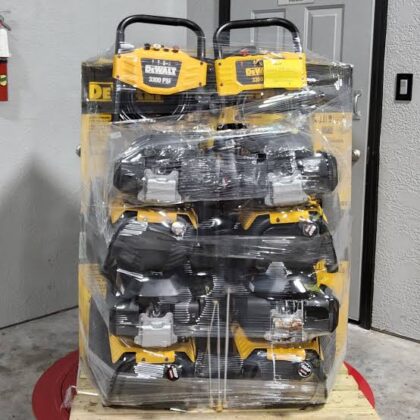
For entrepreneurs and resellers, understanding the journey of Returned Goods can reveal opportunities to source wholesale inventory at competitive prices. From electronics and household merchandise to power tools liquidation, perfumes, cosmetics, and mixed-product pallets, returned inventory can offer a variety of products for resale.
City Pallets Wholesale Liquidations helps buyers explore wholesale liquidation opportunities across Canada and ships worldwide. Whether you are a first-time reseller or an established business, understanding how Returned Goods move from the original customer to the liquidation market can help you evaluate inventory more carefully and make informed buying decisions.
In this guide, we explain the returns process, how liquidation works, what to check before buying return pallets, and how to approach buying and selling return pallets for profit.
What Are Returned Goods?
Returned Goods are products that customers send back to a retailer, seller, or supplier after purchasing them. Returns happen for many reasons: an item may not fit, the customer may have changed their mind, the wrong product may have been delivered, or the merchandise may be damaged or defective.
Not every returned item is used or faulty. Some products are unopened and appear almost new, while others have damaged packaging, missing accessories, visible wear, or functional problems.
Common examples of Returned Goods include:
- Electronics such as tablets, accessories, and household devices.
- Power tools and hardware products.
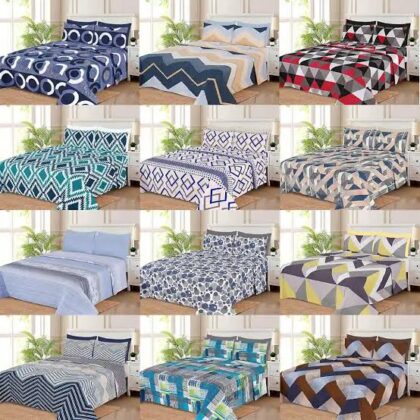
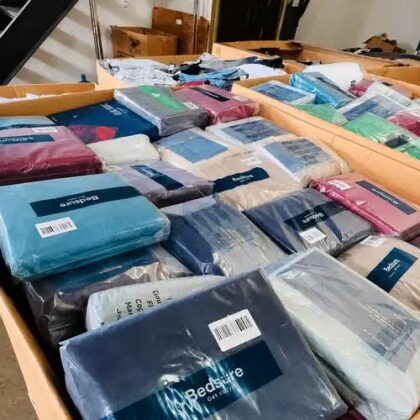
- Clothing, footwear, and accessories.
- Perfumes, makeup, and other cosmetics.
- Kitchen products, home goods, and general merchandise.
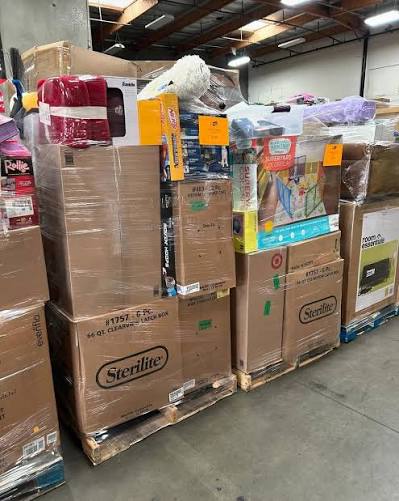
- Mixed products sold in return pallets or liquidation boxes.
The exact condition and contents depend on the source. Buyers should never assume that every returned product is new, tested, complete, or ready for resale.
How Returned Goods Move Through the Liquidation Process
1. The Customer Returns the Product
The journey of Returned Goods usually begins when a customer initiates a return under a retailer’s or seller’s return policy. The product may be returned to a physical store, shipped to a returns facility, or processed through a designated logistics centre.
At this stage, the reason for the return can provide useful context. A product returned because it was the wrong size may be in excellent condition. An item returned because it stopped working may require testing or repair.
However, a return reason does not prove the product’s actual condition. Inspection is still important.
2. The Retailer Receives and Sorts the Return
Once Returned Goods reach a retailer or processing facility, staff may check the order details, product identification, packaging, and visible condition.
Some retailers can return suitable items to regular inventory. Others separate merchandise into categories based on condition, resale potential, and processing costs.
Possible categories include unopened products, open-box merchandise, customer returns requiring inspection, damaged goods, and items that may need refurbishment.
The procedures differ between businesses. There is no universal process that every retailer follows, and some products may move through third-party returns or logistics providers.
3. Products Are Inspected and Assessed
Inspection helps determine what should happen next. Depending on the product, an assessment may involve checking the packaging, confirming that accessories are present, testing functionality, or identifying visible damage.
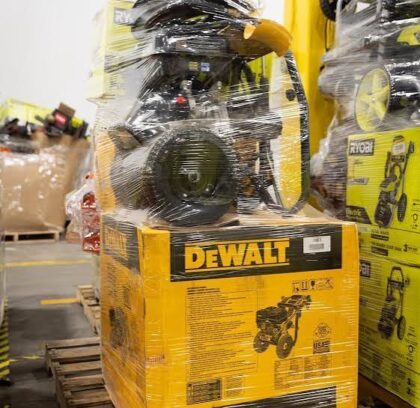
For example, a power tool may need to be checked for its model number, battery, charger, and operating condition. An electronic device may require testing to confirm that it powers on and functions correctly.
Not all liquidation inventory receives the same level of inspection. Some lots may be tested and graded, while others may be sold as mixed or unmanifested merchandise.
This is why buyers should ask what the seller knows about the goods, whether a manifest is available, and what the stated condition means.
4. Returned Goods Are Routed to Different Destinations
After assessment, Returned Goods may follow several possible paths:
- Restocking: Suitable products may return to regular retail inventory.
- Open-box or discounted resale: Items with opened packaging may be sold at reduced prices.
- Refurbishment or repair: Products that can be restored may be repaired and resold.
- Liquidation: Surplus, mixed, or economically impractical-to-process inventory may be sold in bulk.
- Donation or recycling: Some goods may be donated, recycled, or disposed of when resale is unsuitable.
Liquidation is only one possible outcome. Not every returned product becomes part of a liquidation pallet, and not every pallet consists exclusively of customer returns. Wholesale liquidation inventory can also include overstock, surplus stock, shelf pulls, and other merchandise.
5. Liquidation Suppliers Prepare Inventory for Buyers
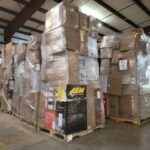
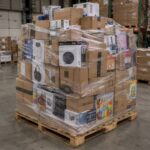
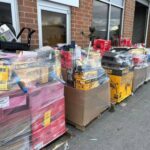
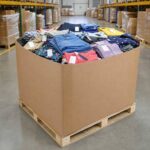
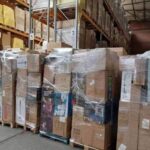
When Returned Goods enter liquidation channels, the merchandise may be grouped into boxes, pallets, lots, or larger wholesale loads.
Some listings include a manifest describing the products and quantities. Others provide general category information without guaranteeing the exact contents.
Buyers should carefully distinguish between confirmed products and examples of possible merchandise. A listing that says a pallet may include electronics or branded tools does not necessarily guarantee that those items will be present.
This is the stage where resellers can begin comparing opportunities, estimating costs, and deciding whether a particular lot fits their business.
Why Returned Goods Create Opportunities for Resellers
Returned Goods can offer resellers access to merchandise in bulk, sometimes at lower acquisition costs than purchasing comparable products individually at retail prices.
However, a lower purchase price does not automatically create a profitable transaction. The final result depends on the product mix, condition, demand, shipping costs, selling fees, and the number of items that can actually be sold.
Access to Different Product Categories
Liquidation suppliers may offer Returned Goods across several categories, allowing buyers to focus on merchandise that suits their experience and customer base.
For example, power tools liquidation may appeal to hardware-focused sellers, while electronics may suit online resellers who can test devices and describe their condition accurately. Household goods and general merchandise may work well for sellers who have local customers or established online sales channels.
Perfumes and cosmetics require particular care. Buyers should verify product authenticity, labelling, condition, and applicable safety requirements rather than assuming that returned beauty products are suitable for resale.
Opportunities to Buy in Bulk
Buying return pallets can provide multiple items in one purchase. This may reduce the time spent sourcing individual products, but it also means the buyer takes on the risks associated with the entire lot.
A pallet may contain items with different resale values and different levels of preparation required. Some products may sell quickly, while others may need testing, repairs, or disposal.
Successful resellers evaluate the entire lot—not just its most attractive item.
How to Evaluate Returned Goods Before Buying
Review the Listing and Manifest
Start by reading the product description, condition notes, quantities, and available manifest. Determine whether the merchandise is described as new, open-box, used, refurbished, customer returns, or mixed inventory.
If the listing does not explain important details, ask the supplier for clarification before purchasing.
Calculate the Full Cost
Include the pallet price, shipping, taxes where applicable, testing, cleaning, repairs, packaging, selling fees, and other direct expenses.
For example, if a pallet costs $500, shipping is $100, and preparation costs are $100, the initial investment is $700. If the items eventually generate $1,000 in sales and selling fees and other direct expenses total $150, the amount remaining is $150 before additional overhead and taxes.
This is only an illustration, not a profit forecast. Actual results depend on how much inventory sells and the prices buyers are willing to pay.
Check Product Safety and Resale Suitability
Before reselling Returned Goods, inspect items for damage, missing parts, and potential safety issues. Check whether products have been recalled or are subject to restrictions.
Health Canada’s guide to buying second-hand products explains that buyers and sellers should consider safety, recalls, required components, and product compliance. It also warns about the additional uncertainty associated with used cosmetics.
Keep questionable products separate until you have established whether they can be sold safely and legally.
Buying and Selling Return Pallets for Profit
Buying and selling return pallets for profit requires a repeatable process. Begin by selecting inventory that matches your knowledge, storage space, budget, and customer demand.
Research realistic selling prices rather than relying on the original retail value. Keep records of what you purchase, how many items are saleable, the time required to prepare them, and how long they take to sell.
You should also choose suitable sales channels. Depending on the merchandise, you may use online marketplaces, your own website, local classified listings, social media, or direct sales to other businesses.
Avoid buying large quantities before you understand your market. Starting with a manageable order can help you identify which product categories perform well and which create too much work or financial risk.
Remember that Returned Goods are not guaranteed to generate profit. Careful sourcing, accurate descriptions, and realistic calculations are more useful than assuming every pallet contains high-value products.
Sourcing Returned Goods With City Pallets Wholesale Liquidations
For buyers exploring wholesale liquidation opportunities, City Pallets Wholesale Liquidations is a business to consider when researching available inventory.
Depending on current listings, product categories may include power tools liquidation, electronics, perfume pallets, mini perfumes, makeup and cosmetics, mystery boxes, liquidation boxes, and general merchandise.
Most of our products are new overstock. Not every listing necessarily consists of Returned Goods. Some merchandise may come from other liquidation categories, so buyers should read the specific description rather than assume that all products are customer returns.
Before ordering, review the listed contents, stated condition, pricing, shipping arrangements, and purchase terms. Ask questions about manifests, inspection procedures, and product details when those factors are important to your decision.
Visit the City Pallets Wholesale Liquidations website to explore available wholesale opportunities.
City Pallets Wholesale Liquidations serves buyers across Canada and ships worldwide. International buyers should confirm delivery terms and consider applicable customs duties, taxes, import restrictions, and product regulations in their destination country.
The best purchasing decision is one that fits your own resale plan, not simply one based on the size of the discount.
Frequently Asked Questions About Returned Goods
What happens to Returned Goods after a customer sends them back?
Returned Goods may be inspected, restocked, discounted, repaired, refurbished, liquidated, donated, recycled, or disposed of. The outcome depends on the product’s condition, the retailer’s policies, and the cost and practicality of processing it.
Are all Returned Goods sold through liquidation pallets?
No. Some returned products return to regular inventory or are sold individually. Others may be refurbished, donated, recycled, or disposed of. Liquidation pallets can also contain overstock and surplus merchandise that was not returned by customers.
Are return pallets new or used?
Return pallets may contain unopened products, open-box items, used merchandise, damaged goods, incomplete products, or mixed-condition inventory. Check each listing carefully and ask the supplier what is known about the condition.
How can I make money buying and selling return pallets for profit?
Research demand, select inventory you understand, calculate all costs, inspect products, and use suitable sales channels. Track actual sales and expenses to measure performance. No supplier or pallet can guarantee a particular profit.
Can I buy Returned Goods through City Pallets Wholesale Liquidations?
You can explore current wholesale liquidation listings through City Pallets Wholesale Liquidations. Confirm the contents and condition of each specific lot, since inventory categories and availability can vary.
Does City Pallets Wholesale Liquidations ship outside Canada?
City Pallets Wholesale Liquidations serves customers across Canada and ships worldwide. Confirm shipping arrangements and any destination-specific customs, tax, or import requirements before placing an international order.
Conclusion: From Returned Goods to Reselling Opportunities
The journey of Returned Goods involves much more than a customer sending a product back. Merchandise may pass through sorting, inspection, testing, resale, refurbishment, and liquidation before reaching its next buyer.
For resellers, understanding this process helps set realistic expectations. Returned Goods can provide useful wholesale sourcing opportunities, but condition, completeness, safety, demand, and total acquisition costs must all be considered before buying.
Whether you are interested in power tools liquidation, electronics, cosmetics, or general merchandise, take time to compare listings and build a sourcing strategy around your customers and budget.
City Pallets Wholesale Liquidations provides wholesale liquidation opportunities for buyers across Canada and worldwide. Explore the available listings, ask questions, and confirm the details of each lot before making a purchase.
With careful evaluation and consistent recordkeeping, you can approach Returned Goods more confidently and build a more informed strategy for buying and selling return pallets for profit.