
Essential Insights: What You Need to Understand Before Buying Pallets
Essential Insights: What You Need to Understand Before Buying Pallets
Buying liquidation pallets can be an opportunity for resellers, small business owners, online sellers, and bargain hunters looking for wholesale inventory. However, before placing an order, it is important to understand what you are buying, how product conditions vary, and what costs may affect the value of your purchase.
Whether you are exploring general merchandise, electronics, cosmetics, perfume pallets, or power tools liquidation, preparation can help you make more informed buying decisions.
At City Pallets Wholesale Liquidations, buyers can explore wholesale liquidation opportunities with service across Canada and shipping worldwide. Before choosing a pallet, take time to understand the inventory category, review the available product details, and calculate your total costs.
This guide explains what to know before buying pallets, including how to evaluate suppliers, assess potential resale opportunities, avoid common mistakes, and choose inventory that fits your business goals.
1. Understand What Liquidation Pallets Are
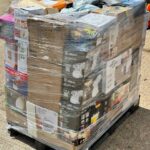
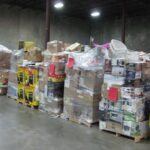
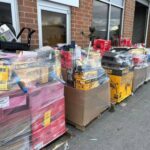
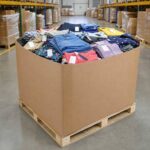
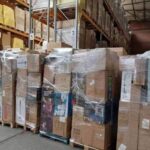
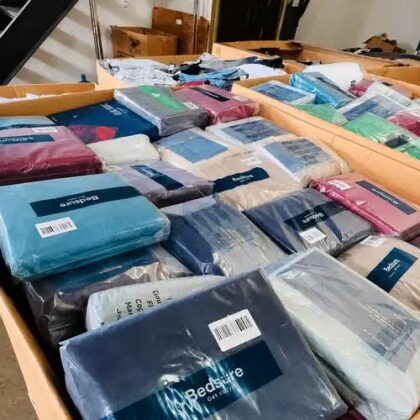
Liquidation pallets are bulk lots of products sold together rather than individually. Depending on the supplier and listing, the merchandise may include overstock, customer returns, excess inventory, shelf-pulls, discontinued products, or mixed general merchandise.
Not every pallet contains the same products or has the same condition. Some lots may include unused items, while others may contain opened packaging, incomplete products, damaged goods, or merchandise that requires testing.
Before buying, identify the type of pallet being offered.
- Overstock pallets: May contain excess inventory that has not sold through normal retail channels.
- Customer return pallets: May include products returned for different reasons and in varying conditions.
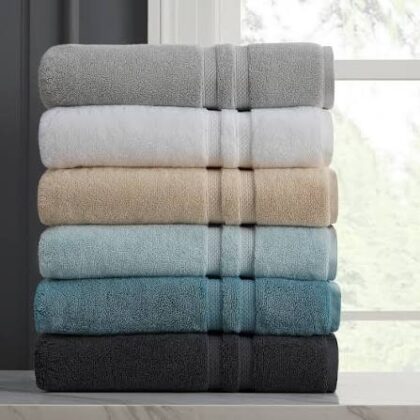
- General merchandise pallets: Can contain assorted household, lifestyle, and everyday products.
- Electronics pallets: May include devices and accessories that need inspection or functional testing.
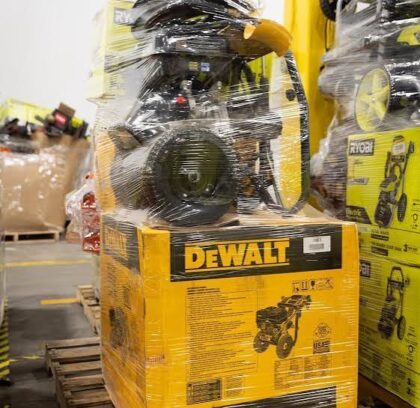
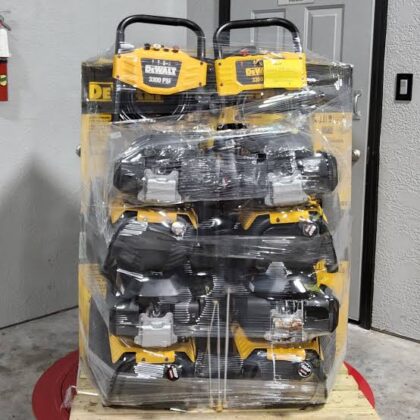
- Power tools liquidation pallets: May contain tools, accessories, batteries, chargers, or related equipment, depending on the listing.
- Perfume and cosmetics pallets: May contain fragrance or beauty-related products, subject to the stated assortment and condition.
- Mystery boxes and liquidation boxes: Offer a different buying format in which the exact contents may be limited or undisclosed before purchase.
The key lesson is simple: never assume every pallet is identical. Read the specific listing and confirm anything that could affect your decision.
2. Check the Product Condition Before Buying
Product condition is one of the most important factors to consider when buying liquidation pallets.
The terms “new,” “open-box,” “used,” “refurbished,” and “untested” are not interchangeable. They can indicate very different levels of usability, packaging quality, and resale preparation.
Before purchasing, ask the supplier:
- What condition categories apply to this lot?
- Are products inspected or tested before sale?
- Are missing parts or damaged packaging disclosed?
- Is a manifest available?
- Are there photographs of the actual inventory?
- What happens if the delivered lot materially differs from the listing?
If the pallet is described as untested, budget for the possibility that some items may not work. If the listing does not guarantee completeness, do not assume every product will include its original accessories, manuals, batteries, or packaging.
For resale businesses, accurate condition descriptions also help reduce customer complaints and returns.
Pay attention to product safety
When purchasing electronics, power tools, children’s products, or other regulated consumer goods, check for recalls, missing safety information, and relevant certification marks. Health Canada’s guidance explains that second-hand and online products may be recalled, damaged, counterfeit, or unsuitable for sale.
Review the official Health Canada online shopping safety guide and the Canadian recalls and safety alerts database before reselling products where safety concerns may apply.
3. Choose a Pallet Category That Matches Your Business
One common mistake is purchasing a pallet simply because the advertised price looks attractive. A better approach is to choose merchandise that matches your customers, storage space, skills, and sales channels.
For example, a reseller who understands household products may find general merchandise easier to manage than a mixed electronics lot requiring extensive testing.
Consider these categories before deciding.
Power tools liquidation
Power tools liquidation can appeal to buyers serving contractors, DIY enthusiasts, repair professionals, and general tool customers.
Depending on the specific lot, products may include drills, saws, accessories, chargers, or other equipment. Before purchasing, confirm whether batteries and chargers are included, whether the tools have been tested, and whether any visible damage or missing components are disclosed.
Electrical safety and product condition should take priority over an attractive advertised price.
Electronics liquidation
Electronics may offer a broad range of potential customers, but they can also require additional testing and preparation.
Check product models, power requirements, compatibility, accessories, and reported condition. Account for the possibility of defective or outdated devices and verify that products are suitable for sale in your intended market.
Perfume and cosmetics liquidation
Fragrance and beauty products may suit resellers targeting customers who purchase personal-care items.
Review the listing for product types, quantities, packaging, authenticity information, and condition. Pay particular attention to expiry or shelf-life information where applicable, storage conditions, ingredient labels, and product integrity.
Health Canada advises against purchasing used or old cosmetics because of potential contamination and missing safety information. Do not assume that every cosmetics or perfume pallet is suitable for resale simply because it is offered at a wholesale price.
General merchandise and liquidation boxes
Mixed merchandise can provide variety, but the assortment may be less predictable. Review any available manifest, photographs, and product-category descriptions to determine whether the contents suit your business.
City Pallets Wholesale Liquidations offers a place to explore liquidation opportunities across relevant product categories. Inventory, product mix, and conditions vary by listing, so confirm the details of the specific lot before ordering.
4. Calculate the Total Cost, Not Just the Pallet Price
A low purchase price does not automatically make a pallet a good deal. You need to understand the full cost of acquiring, preparing, and selling the merchandise.
Include expenses such as:
- Pallet purchase price
- Shipping and handling
- Applicable taxes, duties, or import charges
- Receiving and unloading
- Storage and workspace
- Testing, cleaning, and repairs
- Packaging and order fulfilment
- Marketplace or payment fees
- Advertising and customer service
- Allowances for unsellable items and customer returns
Example: Estimate your potential return
Imagine you purchase a pallet for $600 and pay $150 for shipping. You spend another $150 on testing, preparation, packaging, and other direct expenses.
Your total estimated cost is $900.
If you eventually sell the merchandise for $1,300 in total, your estimated gross margin after these listed costs is $400, before any additional overhead, income tax, or expenses not included in the calculation.
However, that outcome depends on actually selling the items for the estimated prices. Some products may take months to sell, attract lower offers, or prove unsuitable for resale.
Use conservative resale estimates rather than assuming every item will sell at its highest advertised price.
5. Research the Supplier Before Placing an Order
Supplier research is especially important when buying pallets online because you may not be able to inspect the merchandise in person.
Look for clear business contact information, detailed product descriptions, written sale terms, shipping information, and understandable policies for complaints, returns, or exchanges.
The Government of Canada’s online shopping guide recommends checking a seller’s legitimacy, product information, total costs, and terms before committing to an online purchase.
Use these steps to assess a potential supplier:
- Verify the business. Check its website, contact details, and available customer feedback.
- Read the listing carefully. Make sure you understand what is included and what is excluded.
- Request clarification. Ask about condition, quantities, manifests, and packaging if these details are important.
- Review payment terms. Understand when payment is due and what documentation you will receive.
- Confirm delivery arrangements. Establish the destination, shipping cost, expected timing, and responsibility for additional charges.
- Save your records. Keep copies of the listing, invoice, order confirmation, and relevant communications.
Avoid relying on unsupported claims such as guaranteed profits, guaranteed premium brands, or every-item-tested assurances unless the supplier explicitly documents those terms.
6. Understand Manifests and Inventory Descriptions
A manifest is an inventory document that may list products, quantities, descriptions, identifiers, or estimated values.
When available, it can help you assess whether a pallet is suitable for your target market. However, a manifest is only as useful as its accuracy and the level of detail it provides.
Before relying on one, ask:
- Does it identify individual products or only broad categories?
- Are quantities confirmed or estimated?
- Does it describe product condition?
- Are values based on retail prices, estimated resale prices, or another measure?
- Does the supplier guarantee that the delivered inventory will match the document?
Some lots may have a detailed manifest, while others may be sold as mixed or partially unknown inventory. Never assume a manifest exists unless the listing confirms it.
If exact products are important to your business, prioritize lots with sufficient inventory information to support your decision.
7. Plan Shipping, Storage, and Handling
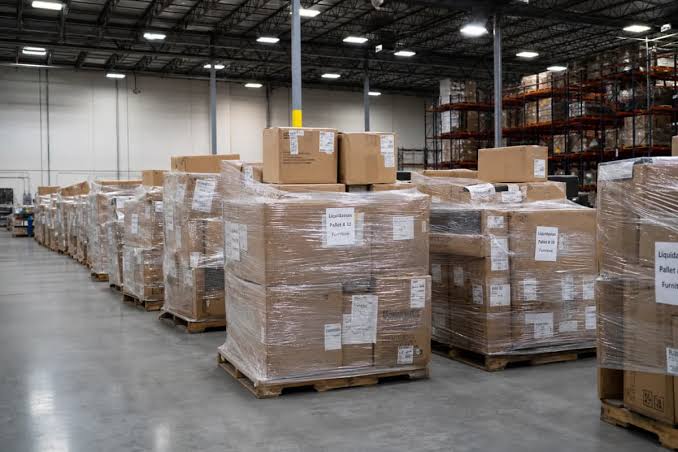
Pallet purchases involve more logistics than buying individual products. Before ordering, determine whether your location can receive a pallet shipment and whether you have suitable space to unload, sort, inspect, and store the merchandise.
Consider the pallet’s dimensions, weight, delivery access, unloading requirements, and any equipment you may need. Some shipments may require a loading dock, forklift, or special arrangements.
Shipping costs can also change the economics of a purchase. A pallet that appears inexpensive may become less attractive if delivery to your location is costly.
At City Pallets Wholesale Liquidations, buyers can explore wholesale liquidation opportunities with service across Canada and shipping worldwide. Before completing an order, confirm the applicable destination, shipping arrangements, delivery terms, and any customs or import charges that may apply to international shipments.
Do not assume all destinations have identical delivery costs or requirements.
8. Create a Resale Strategy Before Buying
If your objective is to resell liquidation inventory, decide how you will market the merchandise before purchasing it.
Possible sales channels include online marketplaces, your own e-commerce website, local retail, and direct sales to customers. Each channel has different fees, competition, customer expectations, and fulfilment requirements.
Research the demand for the products in your pallet. Compare realistic selling prices, examine competing listings, and estimate how quickly you could move the inventory.
You should also decide how to handle products that cannot be sold as originally intended. Some may require repair, additional accessories, discounted pricing, or responsible disposal.
A useful buying rule is to start with a manageable order. Smaller purchases can help you learn about product condition, handling requirements, customer demand, and the actual costs of liquidation resale before committing more capital.
Remember that liquidation resale is a business activity, not a guaranteed source of income. Results depend on the merchandise, buying price, market demand, operating costs, and your ability to sell the products.
9. Avoid Common Pallet-Buying Mistakes
Even experienced buyers can make costly errors when they rush into a purchase.
Buying without checking the condition: An inexpensive lot may contain products that require significant work or cannot be sold.
Ignoring shipping expenses: Always calculate the landed cost before deciding whether a pallet represents value.
Assuming every item is profitable: Retail prices do not tell you what customers will actually pay or how quickly products will sell.
Choosing an unfamiliar category: Merchandise that requires specialist knowledge may be harder to inspect, test, or market.
Overlooking safety and compliance: Check relevant recalls, labels, certifications, and legal requirements before selling products.
Purchasing more inventory than you can manage: Large lots require working capital, space, time, and an effective sales process.
Failing to read the terms: Understand the supplier’s policies before paying, particularly when condition, delivery, and returns matter.
Avoiding these mistakes will not eliminate every risk, but it can help you make better-informed buying decisions.
10. Why Consider City Pallets Wholesale Liquidations?
Finding an appropriate supplier is an important step in building a liquidation buying strategy.
City Pallets Wholesale Liquidations provides a place for buyers to explore wholesale liquidation opportunities across Canada, with shipping worldwide. Depending on available listings, relevant categories may include liquidation pallets, power tools liquidation, electronics, perfume pallets, cosmetics, mystery boxes, liquidation boxes, and general merchandise.
The right purchase depends on your individual needs. A retailer sourcing tools may have different requirements from an online seller specializing in beauty products or a buyer looking for assorted merchandise.
Before placing an order, review the current product listing and confirm the inventory description, condition, price, shipping terms, and any other details that affect your decision.
Visit the City Pallets Wholesale Liquidations website to explore available opportunities and identify inventory that may suit your business.
Frequently Asked Questions
What should I know before buying liquidation pallets?
Understand the product category, condition, inventory description, supplier policies, shipping charges, and total acquisition costs. If you plan to resell the products, research customer demand and realistic selling prices before buying.
Are liquidation pallets worth buying?
They can be suitable for buyers who understand the merchandise, manage costs carefully, and have a realistic sales plan. However, inventory quality and resale results vary, and there is no guarantee of profit.
Should I buy manifested or unmanifested pallets?
A manifested pallet may provide more detail about its contents, while an unmanifested lot may involve greater uncertainty. Choose based on your budget, risk tolerance, and ability to evaluate mixed inventory.
Are power tools liquidation pallets a good option?
They may suit buyers serving tool customers, contractors, and DIY enthusiasts. Review the exact assortment, product condition, testing status, batteries, chargers, and safety information before purchasing.
Can I buy liquidation pallets in Canada and have them shipped internationally?
City Pallets Wholesale Liquidations serves customers across Canada and ships worldwide. Confirm delivery availability, shipping costs, customs requirements, duties, taxes, and other applicable charges for your destination before ordering.
What is the biggest mistake when buying pallets?
One of the biggest mistakes is judging a pallet by its advertised price alone. Buyers should consider the complete cost, product condition, likely resale demand, handling requirements, and the possibility of unsellable items.
Conclusion: Make an Informed Decision Before Buying Pallets
Understanding what to know before buying pallets can help you approach liquidation purchasing with greater confidence and a more realistic plan. Focus on product condition, supplier credibility, inventory information, shipping expenses, safety requirements, and potential resale demand.
Whether you are considering power tools liquidation, electronics, perfume pallets, cosmetics, or mixed general merchandise, take the time to investigate the specific lot rather than relying on assumptions.
City Pallets Wholesale Liquidations helps buyers explore wholesale liquidation opportunities across Canada, with shipping worldwide. Review available listings, ask questions when details are unclear, and choose inventory that fits your budget, storage capacity, and business objectives.
The most effective pallet-buying strategy starts with research, careful cost calculations, and realistic expectations—not simply the lowest advertised price.